


How Wheel.me Autonomous Mobile Robots (AMRs) Transform Factory Intralogistics in MENA
Turn any modular pipe-and-joint trolley or workstation into a self-driving indoor robot with 250 kg payload capacity, 3× lower cost, and 10× faster deployment than traditional AGVs.
- 250 kg
- Payload (4-Wheel Config)
- 3x
- Lower Cost vs. Traditional AMRs
- 10x
- Faster Implementation
- >95%
- Mission Success Rate
Executive Summary & Engineering Takeaway
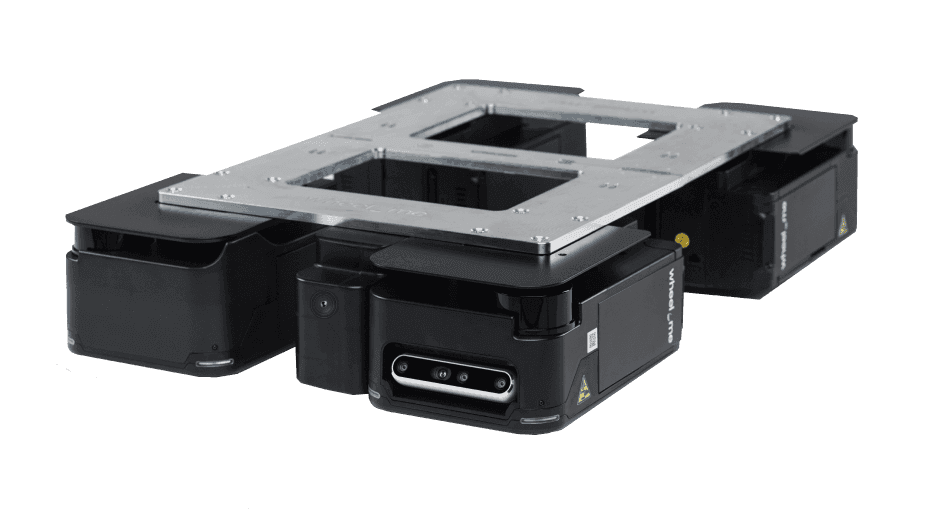
Wheel.me autonomous robotic wheels replace standard caster wheels on any ADAPTIV modular rack or kitting trolley, transforming existing shopfloor carts into self-driving Autonomous Mobile Robots (AMRs) with a 250 kg payload (4-wheel setup), >95% mission success rate, 3× lower cost, and 10× faster commissioning than conventional AGVs.
1. Why Retrofitting Existing Carts Beats Buying Monolithic AGVs
Traditional AGVs and AMRs require purchasing expensive robotic platforms PLUS custom top-modules or towing hitches, often requiring magnetic floor tape or weeks of LiDAR integration.
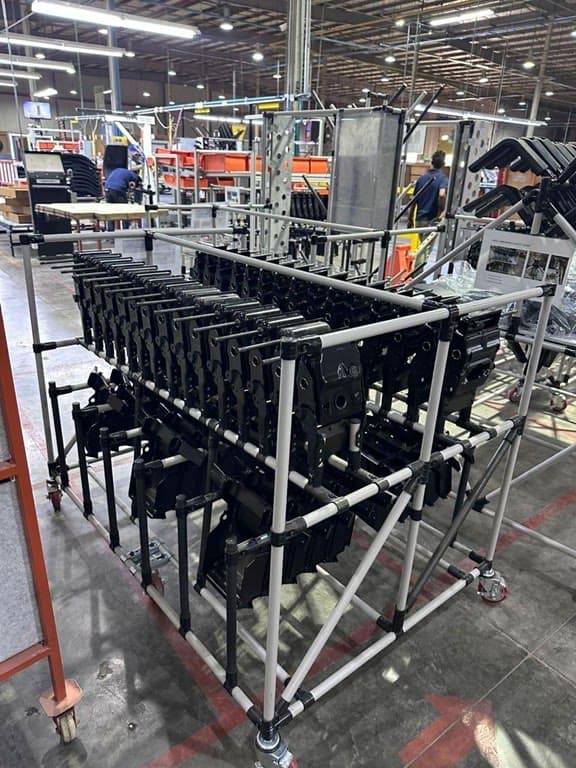
With Wheel.me (supplied and integrated by ADAPTIV), the robot IS the wheel. Four smart robotic wheels bolt directly onto the base of your ADAPTIV modular pipe-and-joint kitting trolley or flow rack, navigating autonomously using onboard sensors without floor modifications.
